Effective environmental management is essential to operating ethically and responsibly. We are committed to protecting our natural resources including water, biodiversity, heritage, air, and the ecosystem in which we operate.
FY2025 SALIENT FEATURES
Water usage
XXX Mm3
FY2024:XXX Mm3
Reportable environmental incidents
Zero
FY2024: Zero
Energy consumption
XXX Mwh
FY2024: XXX MWh
GHG emissions
XXX tCO2e
FY2024: XXX tCO2e
The Group’s operations are not subject to any significant environmental regulations under either Commonwealth or State legislation and there has consequently been no breach. The Group is subject to numerous environmental regulations in South Africa, including:
- National Environmental Management Act, 1998 (No. 107 of 1998): Amendment to the Environmental Impact
Assessment Regulations 2014; - National Water Act, 1998 (No.36 of 1998);
- National Heritage Resources Act, 1999 (Act 25 of 1999); and
- National Environmental Management Air Quality Act, 2004 (No. 39 of 2004).
Our Roadmap to NetZero by 2050 drives a transformative, sustainable transition to net zero through purposeful actions, collaborative interventions and best practice methodology to maximise our contribution to a net positive society. The Roadmap seeks to create a systematic and integrated approach to ESG impact management, which including the now established Net Zero Advisory Council (NETZAC). The NET ZERO’s Advisory Council (NETZAC) brings together a community of experts in their respective fields to drive the company’s net zero strategy, transitioning from a commitment to a campaign of action.
Our pathway to net zero focuses on the following areas:
Water
Our goals: Reduce our dependence on water due to the water scarcity in our asset locations; reduce freshwater usage; and prevent the deterioration of water resource quality
The water management systems at the operations have been designed to operate a closed water system with zero discharge to the natural environment. MC Mining’s operations strive, through the implementation of continued improvement projects, to reduce water consumption by increasing the use of wastewater in the processing of coal. We employ the latest water management technology at our operations. Clean and dirty water facilities are monitored regularly to ensure compliance with the IWUL requirements. Action is taken in the event of any exceedances.
In FY2025 we withdrew XX Mm3 potable water from external resources and recycled XX Mm3 in process.
We are constantly assessing opportunities to reduce our freshwater consumption while working with relevant water boards and local municipalities to address regional water losses.
Biodiversity and land management
Our goals: Minimise land usage; promote conservation and biodiversity; and invest in biodiversity stewardship
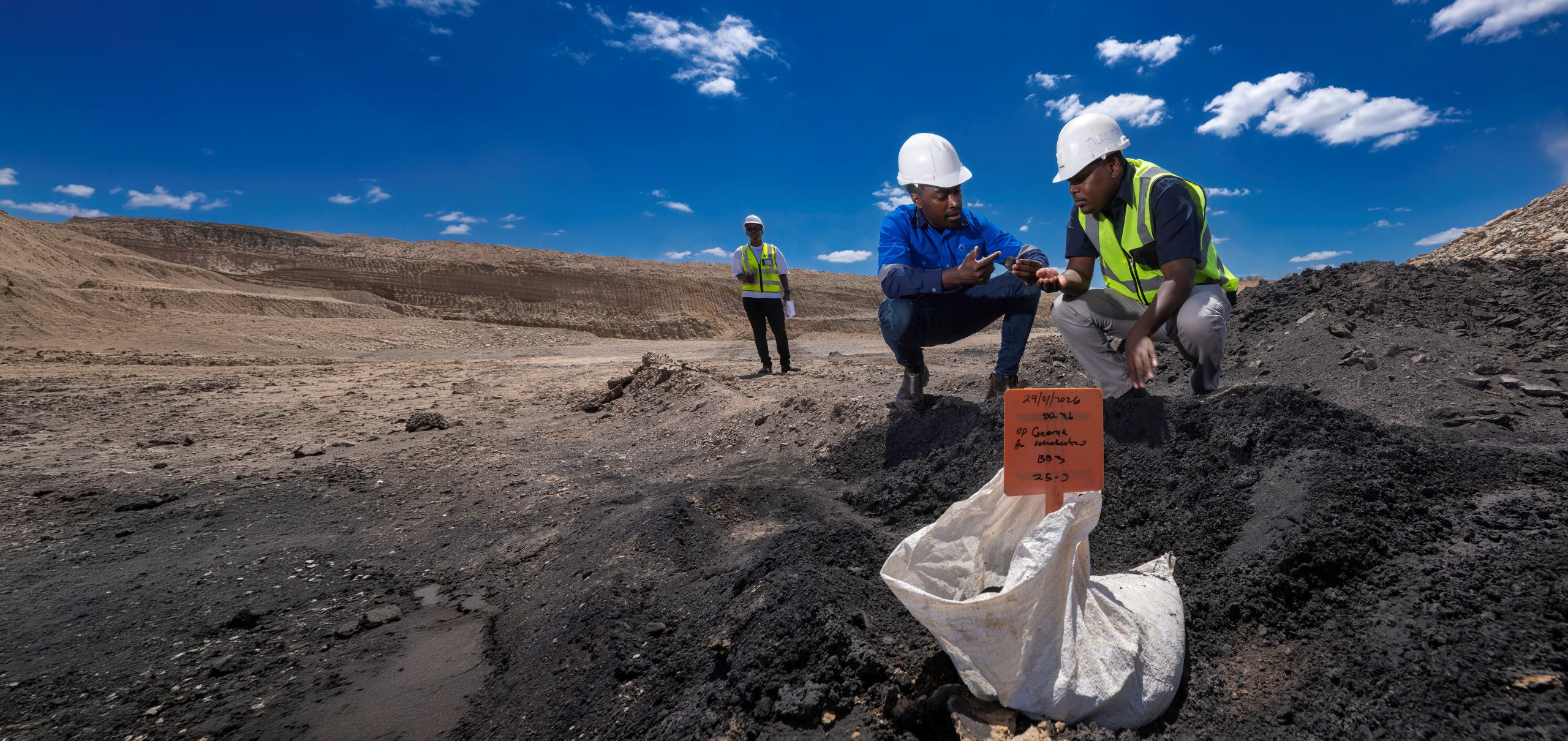
Environmental Management Strategy and Systems (EMS) are in place at Vele, Uitkomst and the Makhado Project for ecological, environmental and ecosystem management. These systems are independently audited every quarter, and reports are submitted to the regulatory authorities. Continuous monitoring is implemented at the mining sites to assess the effectiveness of controls.
Alien vegetation eradication programmes are in place at active operations.
We have allocated 3 800ha outside of the Makhado mining footprint for a voluntary biodiversity offset on a “like for like” basis. This land
will be utilised for conservation, heritage, biodiversity and other associated economic benefits co-existence model with the aim of creating a net positive impact.
Quarterly environmental management meetings are held at the Vele Colliery due to its proximity to a heritage site.
Climate change and energy use
Our goals: ensure resource efficiency in respect of energy consumption; invest in renewable energy sources where possible; manage and reduce our greenhouse gas emissions; guard against the impact of climate change on our business and communities.
We have developed an actionable climate strategy that demonstrates a recognition of the potential impacts of climate change on our operations.The strategy encompasses adoption of latest technology, infrastructure design and methodologies, and embraces opportunities presented such as carbon abatement and offset projects.
We are implementing renewable energy opportunities in partnership with regional stakeholders and identifying climate adaptation corridors as part of our biodiversity offset programme.
Waste management
Our goals: eliminate unnecessary wastage and waste to landfill by implementing waste reduction, reuse, and recycling initiatives in support of circular economies.
Waste is separated at source on all operating sites, with waste bins placed strategically in the plant and mining areas according to the colour codes. All the hazardous waste is stored in bunded facilities to prevent and minimise possible pollution.
We continue to identify waste reduction, reuse, and recycling opportunities in conjunction with surrounding communities.
Air quality
Our goals: manage air quality emissions to an acceptable standard; and minimise the impact of dust on our surrounding communities and the environment.
Ongoing air quality monitoring is conducted at active operations with dust fallout monitoring conducted monthly. Action is taken in the event of any exceedances from the National Standards. Vele Colliery has an Particulate Matter (PM10) monitoring station and a
weather station.
We seek to identify air quality offset projects within communities most affected by poor air quality. Potential offset projects identified include providing alternative fuels for cooking, paving roads, and waste management to reduce illegal burning of waste.